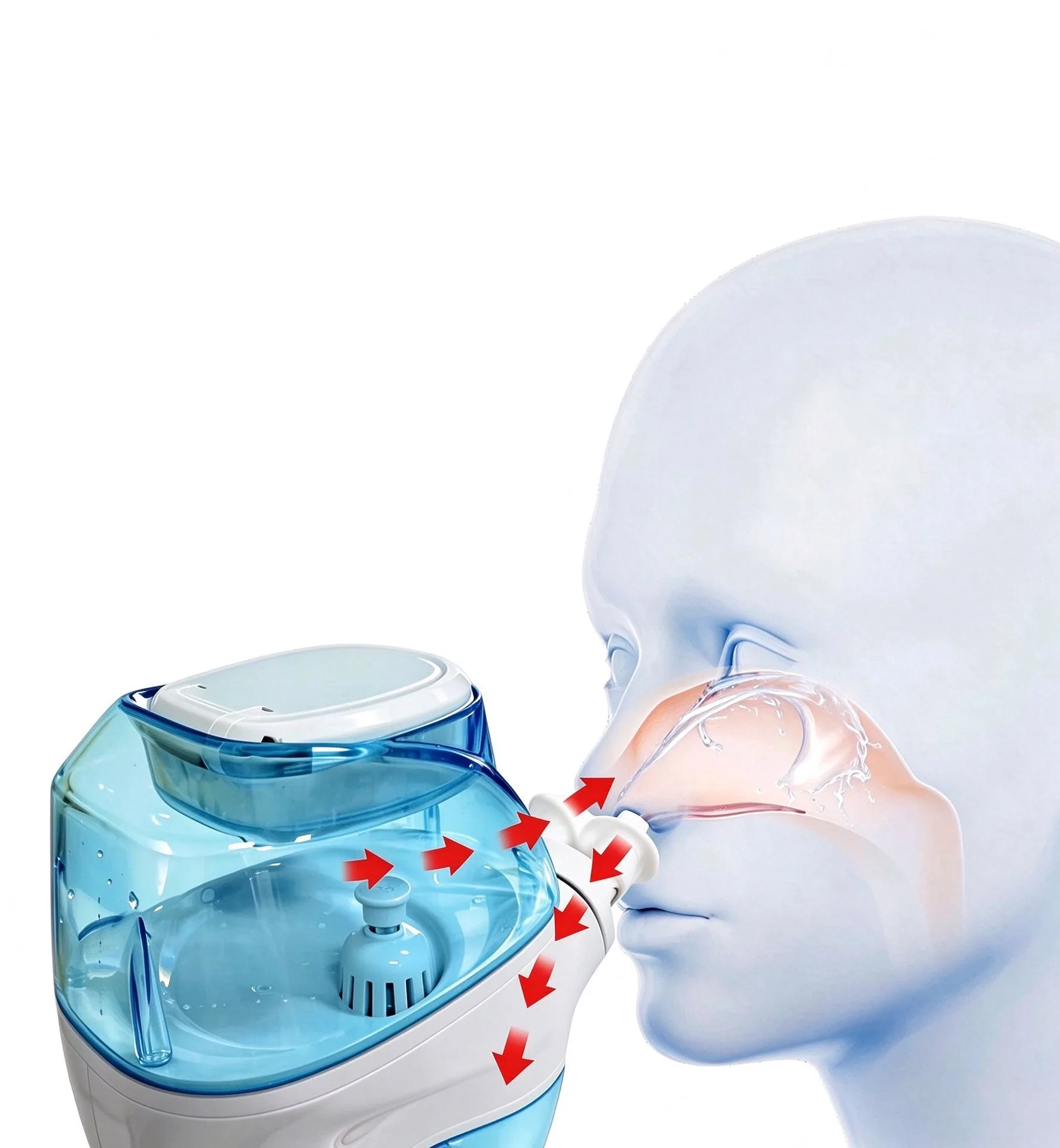
How to Use a Nasal Irrigator Correctly? Complete Operation Guide
How to Use a Nasal Irrigator Correctly? Complete Operation Guide
Article Summary: A nasal irrigator is an auxiliary tool for daily nasal care. Correctly choosing the rinsing solution, mastering the usage steps, and properly cleaning the equipment help enhance user experience and safety. This article introduces how to use a nasal irrigator scientifically from aspects such as pre-use preparation, operation steps, cleaning and maintenance, and common FAQs.
I. Why Use a Nasal Irrigator Correctly?
The nasal cavity is an important part of the human respiratory system, helping to filter some particulate matter from inhaled air and participating in respiratory defense through nasal mucus and cilia.
In daily life, dust, pollen, and nasal secretions may accumulate in the nasal cavity. Appropriate saline nasal irrigation can help remove some mucus, secretions, and attached particles, and may also help alleviate nasal symptoms in some patients with allergic rhinitis.
However, the effectiveness of a nasal irrigator depends not only on the product itself but also on the choice of rinsing solution, operation methods, and equipment cleanliness. Mastering the correct usage method is an important step toward safe nasal care.
II. What Needs to Be Prepared Before Using a Nasal Irrigator?
1. Choose the Appropriate Rinsing Solution
Nasal irrigation is usually recommended to be performed with saline of an appropriate concentration, such as a solution prepared with dedicated nasal wash salt according to instructions, or a ready-to-use rinsing solution meeting product requirements.
It is not recommended to directly use plain water instead of saline, as inappropriate solutions may irritate the nasal mucosa.
2. Use Safe Water Sources
This is a very important safety aspect during the nasal irrigation process.
Distilled water, sterile water, or water that has been boiled and cooled should be used to prepare the rinsing solution. Even if tap water meets daily drinking standards, it does not mean it can be used directly for nasal irrigation.
According to recommendations from the Centers for Disease Control and Prevention (CDC), tap water should be thoroughly boiled and cooled before use; boil for at least 1 minute under general altitude conditions, and extend the time according to relevant guidelines in high-altitude areas. Specific preparation methods should also follow the nasal wash salt and equipment instruction manual.
3. Check Equipment Status
Before use, confirm that:
The water tank is clean with no obvious stains or residual liquid.
The nozzle and connecting parts are installed correctly without obvious damage.
The device and related components have been cleaned and dried according to instructions.
The power supply, charging status, and other operating components are normal.
If the device has water leakage, abnormal noise, loose parts, or other issues, stop using and inspect it first.
III. How to Use a Nasal Irrigator Correctly? Five-Step Operation Guide
Step 1: Clean Hands and Prepare the Rinsing Solution
Wash hands with soap and water before use.
Prepare saline of an appropriate concentration according to product instructions, and confirm that the liquid temperature is appropriate—do not use excessively hot liquids. Avoid adding essential oils, disinfectants, or other substances not permitted by the product instructions on your own.
Step 2: Add the Rinsing Solution According to Instructions
Add the prepared rinsing solution into the device water tank, taking care not to exceed the maximum capacity marked on the product.
If the device requires the installation of a nozzle or other accessories, connect them correctly according to the instruction manual. Do not randomly disassemble parts while the device is running.
Step 3: Adjust Posture and Position the Nozzle
Stand in front of a washbasin and adjust your head and body posture according to product instructions.
Gently place the nozzle at the entrance of the nostril, avoiding forcible insertion or compression of the nasal cavity. Stay relaxed during use; do not forcefully inhale, nor increase water pressure on your own in pursuit of cleaning results.
The operation methods of different nasal irrigators may vary and should be subject to the instruction manual of the corresponding model.
Step 4: Start the Device and Perform Gentle Rinsing
Start the device according to product instructions and use the recommended working mode.
Maintain natural breathing during rinsing and pay attention to physical sensations. If obvious pain, ear pressure, nosebleeds, or other discomfort occurs, stop using immediately.
Do not assume that stronger water flow and longer rinsing time will always yield better cleaning results. Appropriate water flow parameters and standardized operation methods are more important.
Step 5: Finish Rinsing and Clear the Nasal Cavity
After turning off the device, remove the nozzle according to the instructions and let the residual rinsing solution drain naturally.
You may blow your nose gently; avoid using excessive force. If obvious discomfort persists, do not continue repeated rinsing.
Upon completion, clean the device according to product instructions to prepare for the next use.
IV. How to Clean and Maintain a Nasal Irrigator After Use?
Equipment cleaning is an indispensable part of nasal care. Residual moisture and secretions can affect equipment hygiene, so proper maintenance should be performed after each use.
1. Promptly Dispose of Remaining Rinsing Solution
Do not leave remaining rinsing solution in the water tank for long periods after use. Empty the container according to instructions and avoid reusing used rinsing solution.
2. Clean Detachable Parts
Clean the water tank, nozzle, and cleanable accessories according to the instruction manual. Do not immerse the motor, battery, or other non-waterproof electronic components in water.
3. Dry Thoroughly
Allow the cleanable components to dry thoroughly after cleaning, and store them in a dry and clean environment.
4. Inspect Equipment Regularly
Periodically check whether the nozzle is clogged, whether connecting parts are loose, and whether the water tank and tubing show residue or damage. Parts that need replacement should be replaced promptly according to product requirements.
The cleaning methods, disinfection methods, and replacement cycles of the equipment shall be subject to the instructions provided by the manufacturer.
V. What Precautions Should Be Taken When Using a Nasal Irrigator?
Do Not Directly Use Untreated Tap Water
This is one of the most important safety precautions for nasal irrigation. Untreated tap water may contain microorganisms that can enter the human body through the nasal cavity and cause serious infections. Even if water looks clear, it cannot be assumed to be suitable for nasal irrigation.
Do Not Use Inappropriate Rinsing Solutions
Prioritize saline of an appropriate concentration or ready-to-use rinsing solutions meeting product requirements. Do not randomly add medications, essential oils, or other substances.
Do Not Force Rinsing
If the nasal cavity is completely blocked and the rinsing solution cannot flow smoothly, or if obvious ear discomfort occurs during rinsing, do not force rinsing by increasing water pressure.
Special Populations Should Consult a Doctor First
Infants and young children, immunocompromised individuals, post-nasal surgery populations, and individuals with prominent nasal diseases or other special health conditions should consult professional medical personnel first to confirm whether they are suitable for use and what method should be adopted.
If nasal symptoms continue to worsen, or if recurring nosebleeds, obvious pain, fever, or other conditions occur, stop use and seek medical attention promptly.
VI. Nasal Irrigator Frequently Asked Questions
Q1: Do I need to use a nasal irrigator every day?
Not necessarily. Whether daily use is necessary depends on personal circumstances, product instructions, and medical advice. There is no need for frequent or excessive rinsing in pursuit of more thorough cleaning.
Q2: Why do I feel a stinging sensation when using a nasal irrigator?
This may be related to inappropriate saline concentration, unsuitable liquid temperature, incorrect operation methods, or existing irritation and inflammation in the nasal cavity. Stop use if stinging occurs and check the rinsing solution and operation method; consult a doctor if symptoms persist.
Q3: Can a nasal irrigator cure rhinitis?
A nasal irrigator is not a standalone treatment device for rhinitis. Appropriate saline nasal irrigation may help alleviate some nasal symptoms, but it cannot guarantee a cure for rhinitis, nor can it replace treatment plans recommended by a doctor.
Q4: Can a nasal irrigator be shared by multiple people?
It is not recommended for multiple people to share the same nozzle or accessories that directly contact the nasal cavity. Clean according to product instructions and prioritize personally dedicated nasal-contact components.
Q5: Why is it necessary to clean the equipment after use?
Prompt cleaning and thorough drying help reduce secretion residue and microbial growth, maintain equipment hygiene, and help sustain normal operational status of the product.
VII. Conclusion: Making Every Nasal Care Session More Scientific
Using a nasal irrigator correctly requires multiple steps, including preparing the rinsing solution, standardized operation, moderate rinsing, and post-use cleaning.
Choosing a product that suits your needs, carefully reading the instruction manual, and always using safe rinsing water will make daily nasal care safer and more convenient.
CrystalNoel advocates scientific and standardized nasal care methods. Understand product functions and usage requirements, start with correct operation, and make daily care more evidence-based.
Warm Reminder: This article is for health science popularization only and does not constitute medical advice. For specific product operation steps, applicable populations, and usage restrictions, please refer to the official instruction manual of the corresponding model.